
Tallahatchie County Three-Day Release Window
No distinct official Tallahatchie County 72-hour release feed was found. The official-source sweep also found no county current roster, archived release search, public update schedule, or stated retention period. A three-day list must therefore be obtained as a bounded records question. Do not assume that a page described as a daily roster can be filtered to 72 hours unless its official publisher says so.
The requested window should use exact Central Time endpoints. A range beginning Friday afternoon and ending Monday afternoon captures a different set of records than three calendar dates. Ask the custodian whether weekend, holiday, or delayed entry affects its operational log. This does not mean the release happened late. It means the record's event time and entry time may answer different questions, and both should be requested if maintained.
Check Tallahatchie County 72-Hour Releases
First determine which authority owned the booking record. Tallahatchie County Correctional Facility is a contract prison that may hold people for several client jurisdictions. A physical exit from the Tutwiler facility is not automatically a Tallahatchie County release. Ask the sheriff where local arrests are booked, then ask the facility or booking office to name the legal custodian and sending agency for the person or log in question.
- Set the three-day start and end timestamps in Central Time, including the year and time of day.
- Identify the facility, custody agency, and booking authority before choosing the office that receives the request.
- Ask for existing booking and release entries in the interval rather than a newly compiled report.
- Request the booking number, actual release time, disposition, and receiving agency or destination for every responsive entry.
- Match each jail event with the relevant court order and check whether another charge or hold remained.
- Trace every transfer through the next custodian's locator, docket, or records office.
Use the Tallahatchie County 24-Hour Release List path when only the same-day interval matters. For the wider request, preserve each entry as a separate booking event. A person could leave a county booking, enter MDOC intake, return to another county, or be taken into federal custody before public systems align.
Tallahatchie County 72-Hour Record Fields
No public Tallahatchie County feed supplies a confirmed three-day field list. The useful fields come from the underlying booking and release record. Ask only for existing, nonexempt material. Names and dates alone can merge separate events, so booking identifiers, custody agency, and destination are central to a sound 72-hour review.
| Field | Use within the 72-hour window |
|---|---|
| Name, aliases, and date of birth | Helps distinguish people with similar names and locate corrected entries. |
| Booking number and booking time | Separates each custody episode, including a later booking in the same period. |
| Booking facility and custody agency | Identifies who held the person and who controls the record. |
| Release date and time | Places the exit within the defined three-day interval. |
| Release type or disposition | Explains whether the event was bond, time served, dismissal, completion, or transfer. |
| Receiving agency or destination | Reveals a continued-custody handoff. |
| Case number or court authority | Connects the operational release entry to the controlling case record. |
A “bonded out” entry shows that pretrial custody ended under court terms, not that the charge ended. “Dismissed” or “nolle prosequi” concerns the case disposition, but another case may still hold the person. “Transferred,” “released to MDOC,” “released to ICE,” and “released to USMS” all require a second custody check. Full discharge is different from parole or earned release supervision, which can continue state control in the community.
Tallahatchie County Weekend Release Checks
A 72-hour interval is useful when the search crosses a weekend or holiday because it avoids dividing the inquiry into separate same-day questions. Yet the window itself does not cure data lag. Ask whether the record system stores the actual exit time, the entry or posting time, or both. If a release order was entered before the interval but executed inside it, the court date and facility event date will differ. Tallahatchie County has two Circuit Court districts, one in Charleston and one in Sumner. Both use the Mississippi Electronic Courts system for circuit matters, but the filing district still matters. Search the district that holds the case. A bond or disposition order is strong evidence of authority to act, though it does not prove the jail carried out the order or that all holds cleared.
The official Seventeenth Circuit MEC information page identifies both Tallahatchie court locations.
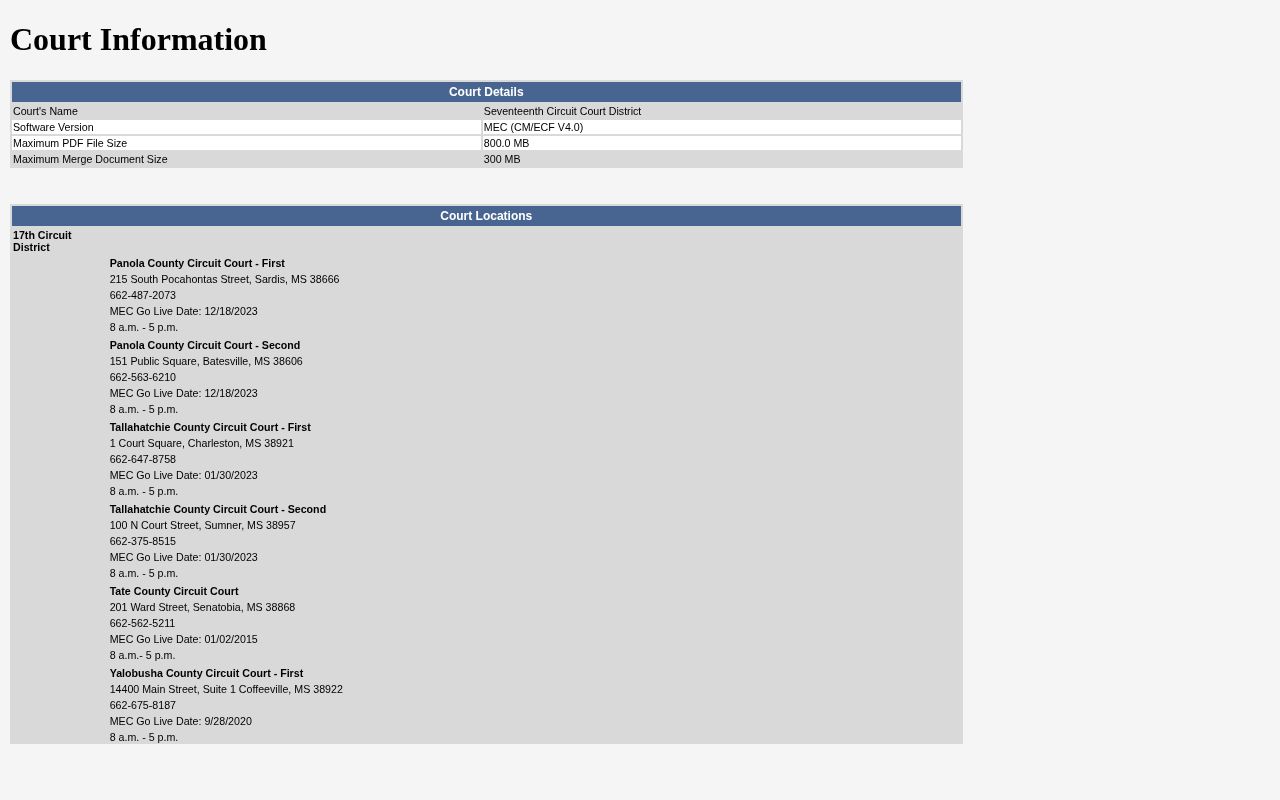
The two-district layout provides a durable court trail when an operational release list is unavailable, but the custodian must still confirm physical release.
Note: Record the exact time zone and endpoints so the custodian can search one clear interval without guessing what “over the weekend” means.
Tallahatchie Release Feed Source Gap
No authenticated Tallahatchie sheriff roster, archive, 24-hour view, 72-hour view, or official online retention statement was located. Commercial pages can use county and jail names in ways that resemble public sources. They should not be treated as sheriff feeds, and their stated update rates, record fields, images, or contact details should not be copied as county facts.
A source check should begin at an official county page. Confirm who publishes the result, which custodian supplies it, what time span it covers, and how a transfer is labeled. If those answers are unavailable, use the booking/release log instead. The official Tallahatchie County directory offers a verified route to the county when no dedicated records portal is published.
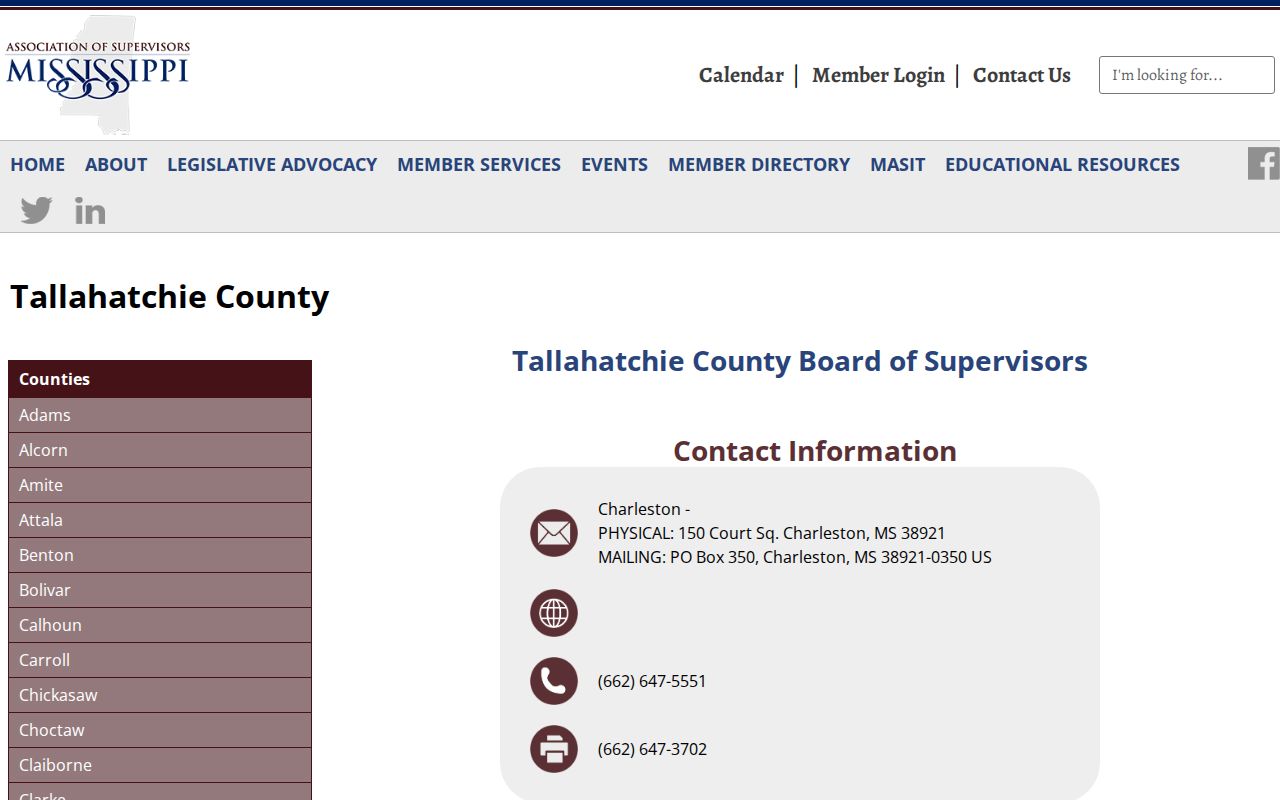
The directory helps identify the county contact. It does not function as a release list or settle which agency owns a contract prisoner's record.
Tallahatchie County Release Fallback Chain
For a Tallahatchie County booking, call or write the sheriff or named custodian. The county directory lists the Board of Supervisors at 150 Court Square, Charleston, with mailing address P.O. Box 350, Charleston, MS, and telephone 662-647-5551. No sheriff-specific request form, email address, copy price, or records hours were verified, so call to confirm the current records contact before sending a date of birth or booking number.
A written request should state the exact 72-hour interval, name, identifiers, facility, and case number. Ask for the release entry, actual booking and release timestamps, disposition, receiving agency or destination, and any correction history. Request an electronic copy, a cost estimate before work, and the statutory reason for withheld material. If the office has no prebuilt three-day report, ask for the existing entries in the interval rather than asking it to create data.
- Local booking
- Use the sheriff or actual county custodian and the correct Tallahatchie court district.
- MDOC custody
- Use the active inmate search, separate parolee search, and MDOC Records for final discharge proof.
- Participating VINE agency
- Use MS SAVIN/VINELink for custody-change alerts, then confirm the event with the named agency.
- Federal or immigration custody
- Use BOP for sentenced federal custody, the federal docket and USMS for many pretrial cases, or ICE ODLS.
- Outside jurisdiction
- Follow the sending county or state even when the person was physically housed in Tallahatchie County.
The Tallahatchie County released inmate lookup brings those person-specific paths together. For a state record not available online, the MDOC public-records route accepts written requests through GovQA. That process is for MDOC material, not a substitute for the local three-day log.
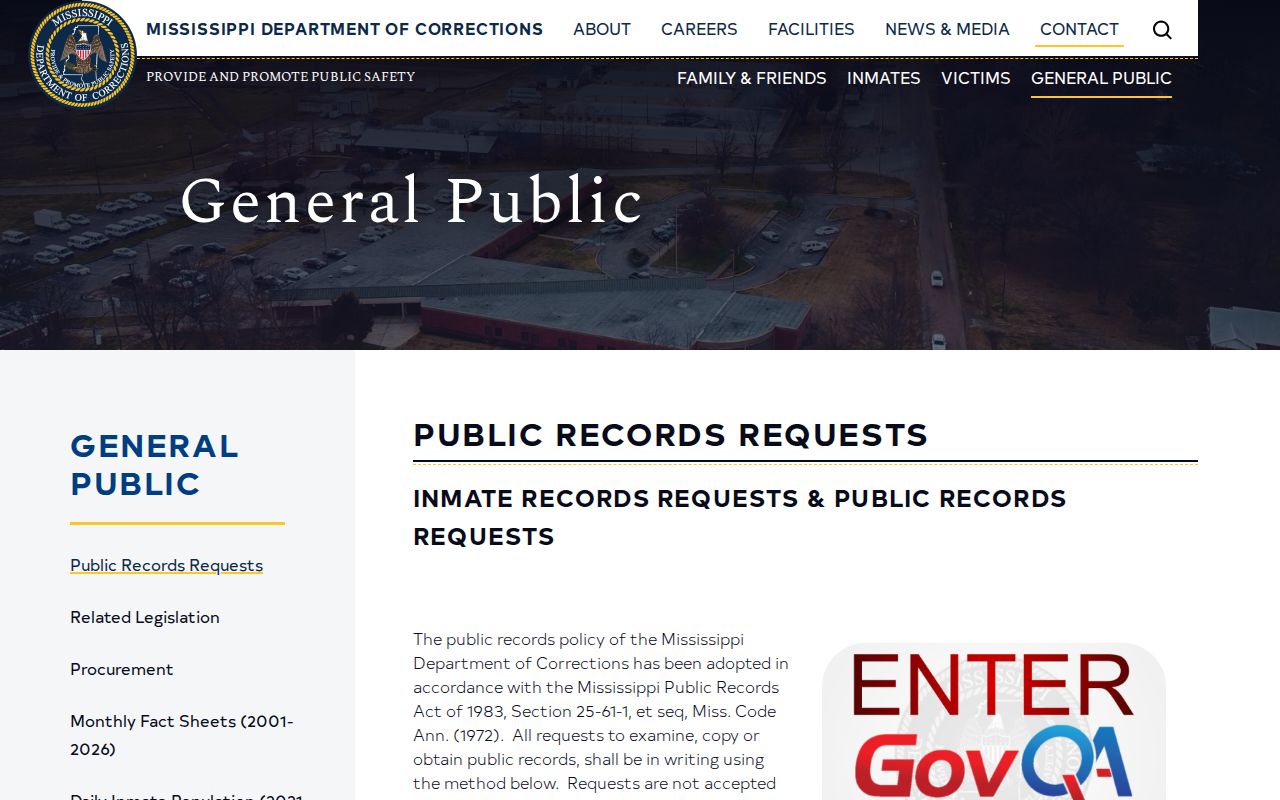
The state request page is useful only after custody provenance points to MDOC. Local bond releases remain county and court questions.
Tallahatchie County Three-Day Reconciliation
Reconcile each Tallahatchie County event instead of treating the 72-hour period as one static list. Start with the booking number and exit timestamp. Pair that record with the court or agency authority. Then read the disposition literally and search the next custodian when one is named. This method catches both transfers and later bookings inside the same three days.
| Finding | Meaning | Verification |
|---|---|---|
| Release with no destination | Possible community release | Confirm execution and check other known holds. |
| Transfer destination named | Custody continued | Find the intake or status in the receiving system. |
| Exit followed by new booking | Separate custody episodes | Keep both booking numbers and timestamps. |
| Court order but no jail entry | Authority may not yet be executed | Ask the custodian for actual status. |
| No current online match | Outcome remains uncertain | Check spelling, custodians, and the written record. |
For Tallahatchie County Correctional Facility, request the sending jurisdiction and legal custodian before selecting a locator. CoreCivic's operator page is facility information, not a roster. MDOC's tentative date does not reveal who left a county jail over three days. Likewise, a VINE event depends on the reporting agency's wording. The destination and next-system match are what distinguish release from a handoff.
Note: A 72-hour result is complete only after each transfer, repeat booking, and unresolved court order has been checked against the responsible office.